This entry discusses current trans issues, and subtly refers to suicidal ideation.
I knew I was trans at seven years old. I lacked the vocabulary to articulate it then, and I was unaware of what being trans meant, but I knew that something felt fundamentally wrong, and I quickly learned that being honest was unsafe. It wasn’t until I was twenty that I came out as something other than female, twenty-three when I came out truthfully as a trans man. This wasn’t because I suddenly became trans at twenty-three, it was because I spent my life paralysed by fear.
Therefore, when people talk about limiting gender-affirming healthcare – making it even harder to access – I don’t see it as “policy.” I see it as a threat.
Being trans isn’t a trend, a phase or a political issue, and it certainly isn’t a choice. I would have done anything to have not been carrying this weight for over half of my life, I didn’t “choose” to be trans. It is simply who I am.
The NHS describes gender dysphoria as causing such profound discomfort that it can lead to depression, anxiety, and have a detrimental effect on daily life. NHS guidelines for adults also include hormone therapy as part of treatment aimed at providing lasting relief from dysphoria and helping individuals feel comfortable with their identity (NHS, n.d).
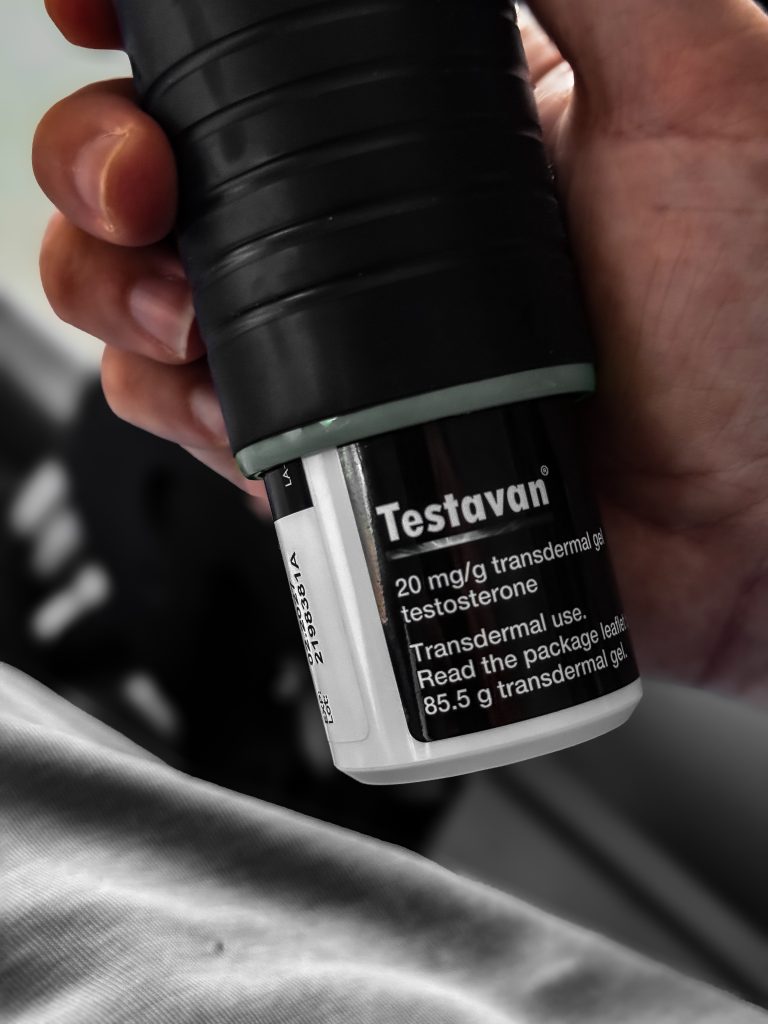
I started testosterone therapy in February 2024, after begging my GP for a bridging prescription for months because my mental health was really not in a good place. For me, HRT wasn’t cosmetic. It wasn’t optional. It wasn’t an “extra” I could have done without. It was suicide prevention. That’s not a slogan to me; it’s the reality of my life.
It’s the reality of many trans folk’s lives, and these realities are backed by evidence. A 2022 prospective cohort study found that access to puberty blockers or gender-affirming hormones was linked to a 60% reduction in the likelihood of moderate or severe depression and a 73% reduction in suicidality over 12 months in trans and non-binary youth. A 2025 follow-up study reported significant reductions in suicidality following hormone therapy. Recent systematic reviews in adults have also indicated that gender-affirming hormones may improve depression, quality of life, reduce suicidality, without identifying significant harms in the studies reviewed (Tordoff et at., 2022; Allen et al., 2025; Cooney et al., 2025).
That is why the situation in the UK at the moment is so worrying for us trans+ folks. In December 2024, the government made the ban on puberty blockers for under-18s indefinite, with a review scheduled for 2027. Then, on the 10th March 2026, Parliament was informed that NHS England had initiated a 90-day consultation proposing that masculinising and feminising hormones should no longer be routinely commissioned for under-18s through the NHS Children and Young People’s Gender Service. While adults aren’t currently under a formal hormone ban, adult gender services are under NHS review, which is more than enough to signal to trans adults that our care could be questioned and stopped at any moment (Department of Health and Social Care, 2024; UK Parliament, 2026; NHS England, 2025).
Do you know what that feels like from my perspective? It feels like being repeatedly told that your life can be dissected by those who will never have to live it. It feels like knowing that the very thing that saved your life can be portrayed as controversial, suspicious, or expendable.
Trans people in the UK are already struggling to navigate a healthcare system that delays us, questions us, and too often fails us. Stonewall reports that 90% of trans people have experienced delays in transition-related healthcare, 70% have been affected by transphobia in general health services, and nearly half of trans people said they had contemplated suicide in the past year (Stonewall, 2018).
So, no, I am not calm about this. I am sad. I am angry. I am scared. Because I know what it is like to live without hope, and I know what changed that. It wasn’t a debate. It wasn’t a headline. It wasn’t a politician deciding whether my existence is acceptable. It was care. It was finally being allowed to become myself after years of suppression.
Banning gender-affirming healthcare will not erase trans people. It will not make trans children cisgender. It will not get rid of trans adults. It will simply leave more of us in pain, and when you remove care associated with lower suicidality from a group already reporting high levels of suicidal thoughts, suicide isn’t some dramatic term people are using for effect. It’s the risk staring you in the face. This isn’t abstract to me. This is my life.
References:
Allen, L.R., Dodd, C.G., Moser, C.N. and Knoll, M.E. (2025) ‘Changes in suicidality among transgender adolescents following hormone therapy: an extended study’, The Journal of Pediatrics. Available at: https://doi.org/10.1016/j.jpeds.2025.114883 (Accessed: 14 March 2026).
Cooney, E.E., Yeh, P.T., Kennedy, K.S., Kaptchuk, R.P. and Kennedy, C.E. (2025) ‘Provision of gender-affirming hormones for trans and gender-diverse adults: a systematic review of health and quality of life outcomes, values and preferences, and costs’, eClinicalMedicine. Available at: https://doi.org/10.1016/j.eclinm.2025.103460 (Accessed: 14 March 2026).
Department of Health and Social Care (2024) Ban on puberty blockers to be made indefinite on experts’ advice. Available at: https://www.gov.uk/government/news/ban-on-puberty-blockers-to-be-made-indefinite-on-experts-advice (Accessed: 14 March 2026).
NHS (n.d.) Gender dysphoria. Available at: https://www.nhs.uk/conditions/gender-dysphoria/ (Accessed: 14 March 2026).
NHS (n.d.) Gender dysphoria – treatment. Available at: https://www.nhs.uk/conditions/gender-dysphoria/treatment/ (Accessed: 14 March 2026).
NHS England (2025) Operational and delivery review of NHS adult gender dysphoria clinics in England. Available at: https://www.england.nhs.uk/long-read/operational-and-delivery-review-of-nhs-adult-gender-dysphoria-clinics-in-england/ (Accessed: 14 March 2026).
Stonewall (2018) LGBT in Britain – health. Available at: https://www.stonewall.org.uk/resources/lgbt-britain-health-2018 (Accessed: 14 March 2026).
Tordoff, D.M., Wanta, J.W., Collin, A., Stepney, C., Inwards-Breland, D.J. and Ahrens, K. (2022) ‘Mental health outcomes in transgender and nonbinary youths receiving gender-affirming care’, JAMA Network Open, 5(2). Available at: https://jamanetwork.com/journals/jamanetworkopen/fullarticle/2789423 (Accessed: 14 March 2026).
UK Parliament (2026) NHSE policy on masculinising and feminising hormones. Available at: https://questions-statements.parliament.uk/written-statements/detail/2026-03-10/hcws1391 (Accessed: 14 March 2026).
Leave a Reply